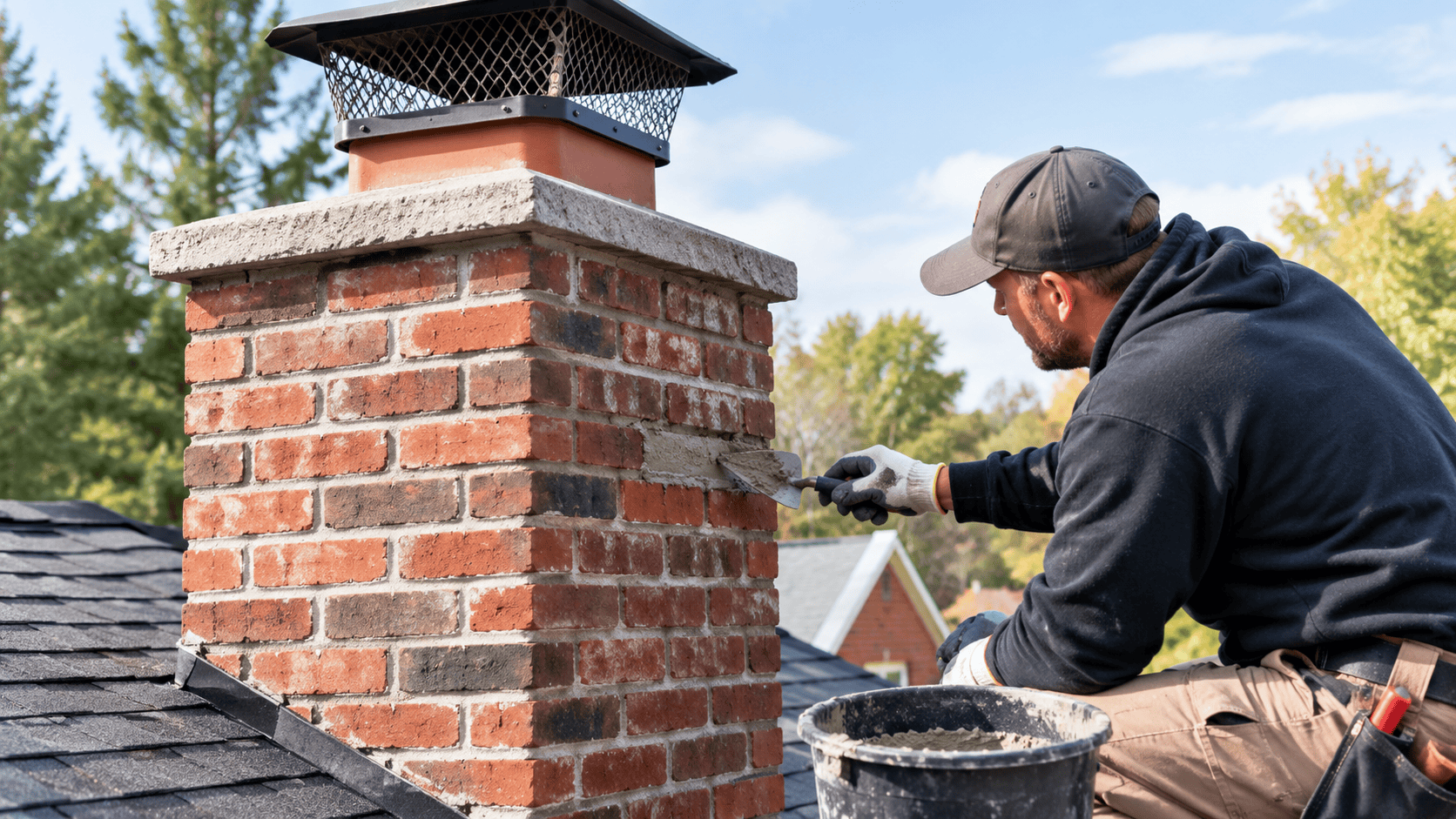
A leaking chimney is more than just an annoying drip — it’s often a warning sign of hidden structural damage. Many homeowners ignore early symptoms like damp walls or musty odors, only to face expensive repairs later. Understanding why chimney leaks happen and how to fix them quickly can save thousands in restoration costs.
This guide explains the four most common causes of chimney leaks, how to identify them, and the best solutions to protect your home year-round.
Objective of This Blog
- Help homeowners understand the main causes of chimney leaks
- Explain how to identify warning signs early
- Provide practical solutions to prevent structural damage
- Encourage timely chimney inspection and repair
Key Takeaways
- Chimney leaks usually come from flashing failure, cracked crowns, damaged masonry, or missing chimney caps.
- Water penetration can cause mold, structural damage, and interior staining.
- Most chimney leaks worsen during winter due to freeze-thaw cycles.
- Annual chimney inspections prevent costly repairs.
Early repairs are significantly cheaper than chimney rebuilds.
Why Chimney Leaks Are a Serious Problem
Water is one of the biggest enemies of masonry. Chimneys are constantly exposed to rain, snow, and temperature changes, making them vulnerable to moisture damage.
When water enters your chimney system, it can cause:
- Cracked bricks and deteriorating mortar
- Mold and mildew growth
- Ceiling and wall stains
- Rusted fireplace components
- Reduced heating efficiency
Even small leaks can lead to major structural issues if ignored.
Four Reasons for a Leaky Chimney and What to Do About Them
1. Damaged or Improper Chimney Flashing
What Is Flashing?
Flashing is the metal seal installed where the chimney meets the roof. Its job is to keep water from entering the gap between roofing materials and masonry.
Why It Causes Leaks
Over time flashing can:
- Rust or corrode
- Lift due to weather or poor installation
- Develop cracks in sealant
When flashing fails, water easily travels into ceilings, attics, and walls. Experts consider flashing failure one of the most common chimney leak causes.
What To Do
- Replace damaged flashing
- Reseal joints professionally
- Ensure step flashing and counter flashing are correctly installed
Professional repair is usually required because improper installation leads to recurring leaks.
2. Cracked Chimney Crown
What Is the Chimney Crown?
The chimney crown is the concrete slab at the top designed to push water away from the chimney structure.
Why It Leaks
Crown cracks form due to:
- Weather exposure
- Freeze-thaw expansion
- Poor construction
Once cracks appear, water pools and seeps into masonry walls, worsening damage over time.
What To Do
- Seal small cracks with crown sealant
- Repair or rebuild severely damaged crowns
- Schedule annual inspections
Fixing crown issues early prevents interior chimney deterioration.
3. Deteriorated Brick and Mortar Joints
Why Masonry Absorbs Water
Brick and mortar are naturally porous materials. Over time, moisture penetrates and expands during freezing temperatures, causing cracks and erosion.
This process leads to:
- Spalling bricks
- Loose mortar joints
- Interior water leaks
Freeze-thaw cycles significantly accelerate chimney damage.
What To Do
- Repoint damaged mortar (tuckpointing)
- Replace broken bricks
- Apply breathable waterproofing treatments
Waterproof coatings help repel moisture while allowing masonry to breathe.
4. Missing or Damaged Chimney Cap
Why the Chimney Cap Matters
A chimney cap acts as the first line of defense against rain, debris, and animals.
Without one, water flows directly into the flue system, causing internal leaks and corrosion.
What To Do
- Install a stainless steel chimney cap
- Replace rusted or loose caps
- Inspect annually for damage
This is often the simplest and most affordable leak prevention solution.
Signs Your Chimney May Be Leaking
Watch for these warning signals:
- Water in fireplace or firebox
- Damp walls near chimney
- Peeling paint or wallpaper
- White stains on exterior bricks (efflorescence)
- Musty odors
These symptoms typically indicate hidden moisture intrusion.
What Could Happen if You Leave Your Chimney Leak Untouched?
Ignoring a chimney leak can lead to serious consequences:
- Structural weakening of chimney masonry
- Mold growth affecting indoor air quality
- Ceiling and insulation damage
- Increased repair costs over time
- Potential chimney collapse in extreme cases
Water damage spreads quietly, meaning what starts as a minor issue can become a full rebuild project within a few seasons.
Found a Chimney Leak? Don’t Wait Until Spring to Fix It
Many homeowners delay chimney repairs until warmer months — but this mistake often makes damage worse.
During winter:
- Water freezes inside cracks
- Expansion widens masonry damage
- Leaks spread deeper into the home
Prompt repairs stop deterioration before seasonal weather accelerates structural problems. Professional inspections can identify hidden issues early and prevent emergency repairs later.
Homeowners often rely on experienced providers like MCP Chinmney Services for timely inspections and long-term waterproofing solutions.
How Professionals Fix Chimney Leaks
Typical repair solutions include:
Flashing Replacement
Creates a watertight roof-to-chimney seal.
Crown Repair & Sealing
Prevents water pooling and penetration.
Masonry Repointing
Restores mortar strength and seals cracks.
Chimney Waterproofing
Adds breathable protection against moisture absorption.
Chimney Cap Installation
Blocks direct rain entry.
Regular maintenance dramatically extends chimney lifespan.
Preventing Future Chimney Leaks
Follow these maintenance tips:
- Schedule yearly chimney inspections
- Install waterproof coatings every few years
- Repair small cracks immediately
- Check flashing after storms
- Keep chimney caps secure
Preventive maintenance costs far less than structural restoration.
Frequently Asked Questions
What is the most common cause of a chimney leak?
Damaged or improperly installed flashing is the leading cause because it sits at the vulnerable roof intersection.
Can a chimney leak fix itself?
No. Chimney leaks always worsen over time due to moisture expansion and structural deterioration.
How much does chimney leak repair usually cost?
Costs vary depending on damage, but early repairs are far cheaper than rebuilding masonry or replacing interiors.
Is chimney waterproofing necessary?
Yes. Waterproofing reduces water absorption while allowing masonry to release trapped moisture.
How often should a chimney be inspected?
At least once per year, preferably before winter.
Final Thoughts
A leaking chimney rarely happens overnight — it develops slowly through aging materials, weather exposure, and neglected maintenance. The good news is that most chimney leaks stem from four fixable issues: flashing problems, crown cracks, masonry deterioration, and missing caps.
Addressing these problems early protects your home, improves safety, and prevents expensive structural repairs. If you notice even minor warning signs, scheduling an inspection sooner rather than later is the smartest move.