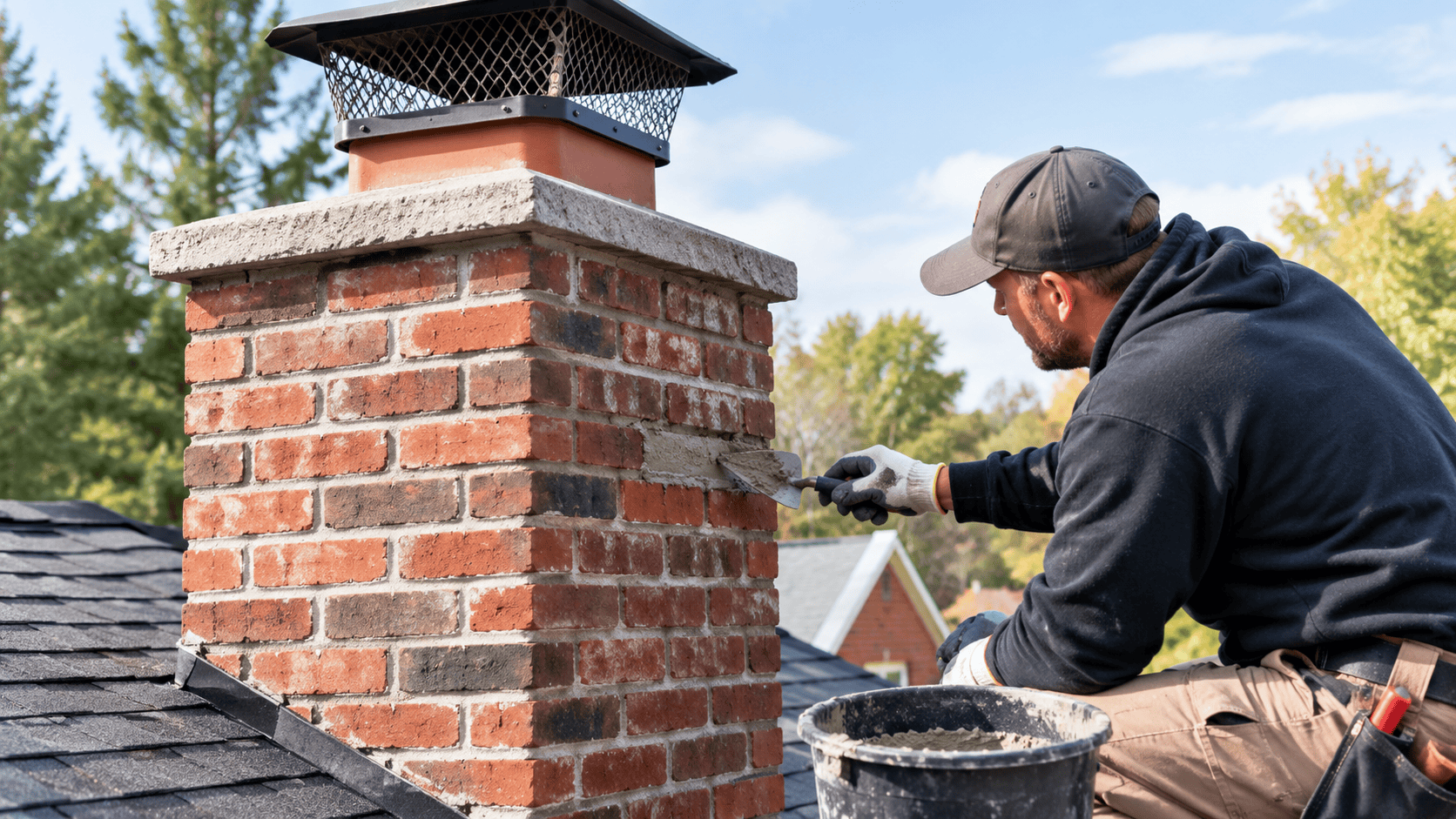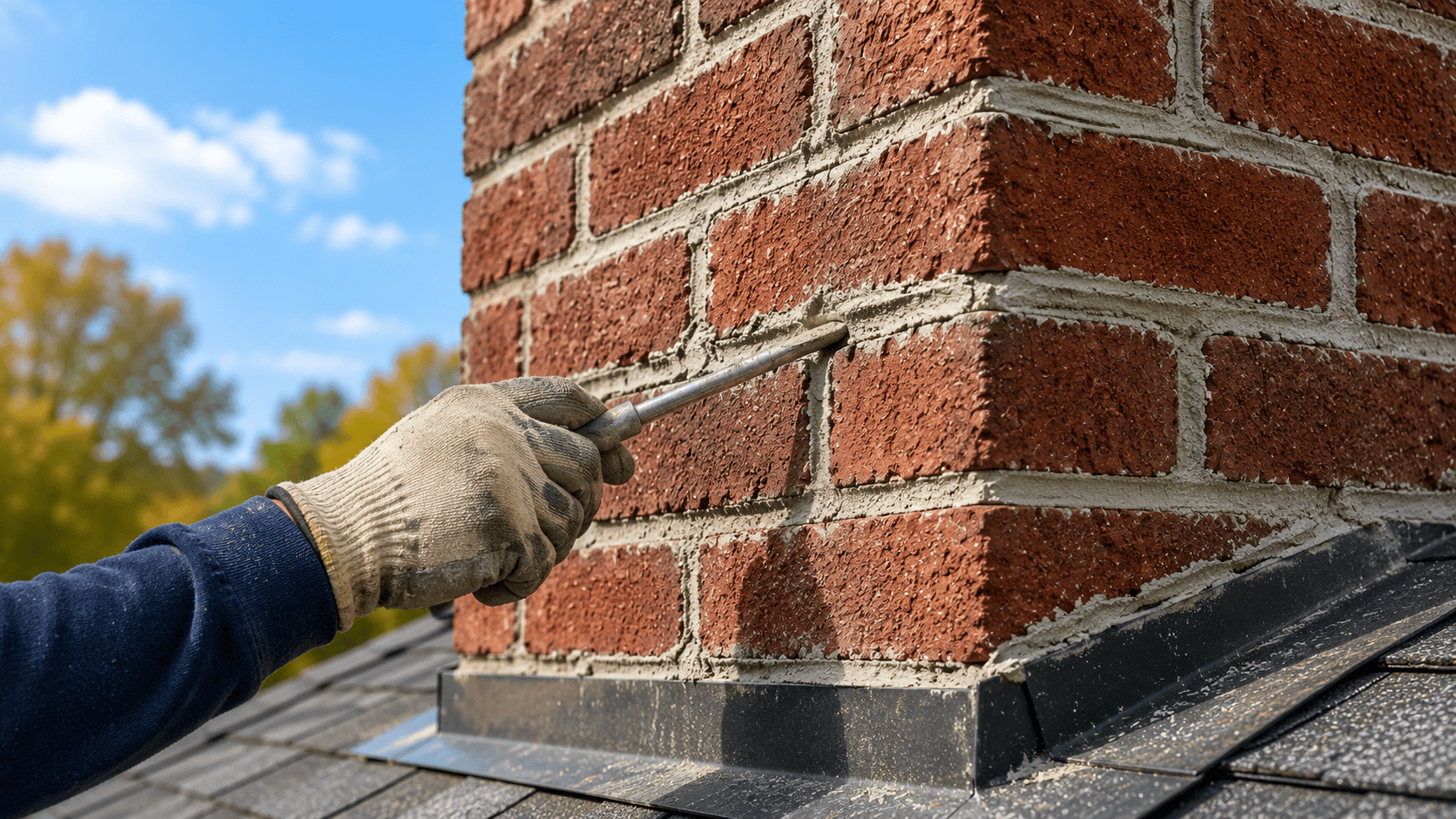
Here's something most homeowners don't realize until a mason points it out on their own chimney: mortar is supposed to wear out before the brick does. It's not a design flaw. It's on purpose. And tuckpointing is simply the repair that keeps that whole system doing what it's meant to do.
What is tuckpointing, exactly?
It's the process of digging out old, deteriorated mortar from between the bricks and replacing it with fresh mortar, matched to the original in color and profile. You'll also hear it called "repointing." The terms get used pretty interchangeably in the field, though technically "tuckpointing" refers to a more specific technique that creates a fine decorative line in the new mortar.
The important part isn't the terminology, though. It's understanding that mortar is the sacrificial layer here. It's softer and more porous than brick on purpose, so it takes the wear first. When it breaks down, and nobody deals with it, water gets past it and starts working on the brick itself, and that's a much more expensive problem to fix than mortar ever is.
Why mortar gives out before the brick
Mortar goes through the same freeze-thaw cycles as the brick around it, but because it's more porous, it soaks up more water. That water freezes, expands, and cracks the mortar from the inside out. Repeat that every Maryland winter for years, and mortar wears down steadily even on chimneys where the brick itself still looks completely fine.
If you're seeing damage that looks like it's already gone past the mortar, actual cracking or crumbling in the brick itself, that's a step further down the same road. Here's what's usually behind that and what your options look like at that point.
How to tell if yours needs it
- Mortar joints that are crumbling, powdery, or straight-up missing in spots
- Visible gaps where mortar's washed out or fallen away between bricks
- Cracks that run along the mortar lines rather than through the brick
- A chimney that looks okay from the ground but feels rough or gritty in the joints up close
Catching this early is really the whole game. A chimney with early mortar loss is a contained, moderate job. Wait until water's gotten into the brick behind it, and that same repair turns into a much bigger and pricier rebuild.
What actually happens during the job
There are three steps here, and skipping any of them is usually why a tuckpointing job doesn't last:
- Grinding out the old mortar to a consistent depth, usually half to three-quarters of an inch without chewing up the brick around it
- Matching the new mortar to the original, both in color and composition. This matters more than people assume. Mortar that's harder than the surrounding brick can actually damage the brick over future freeze-thaw cycles instead of protecting it.
- Packing and finishing the joints properly so the new mortar actually bonds, instead of just sitting on the surface looking fixed
What it costs
Mostly comes down to how much of the chimney needs work and how easy it is to get to. A small patch near the crown is a quick job. Repointing the whole chimney, especially if it's on a steep roof that needs scaffolding or a lift, runs a lot more. Really, the only way to get an accurate number is to have a mason actually look at it; mortar damage is often worse underneath than it looks from the ground.
Frequently Asked Questions
What is chimney tuckpointing?
Removing deteriorated mortar from between the bricks and replacing it with fresh, properly matched mortar. It's a maintenance repair that protects the brick from long-term water damage.
How do you know if a chimney needs tuckpointing?
Look for mortar that's crumbling, powdery, or missing between bricks, visible gaps, or cracks running along the joints rather than through the brick itself. If the mortar feels loose to the touch, that's a clear sign.
Is tuckpointing the same as repointing?
Basically, yes, the two terms get used interchangeably. Tuckpointing technically describes a specific finishing technique, but both refer to the same core repair: fixing failed mortar joints.
Notice crumbling mortar on your chimney? Get a tuckpointing estimate before it turns into a brick problem.