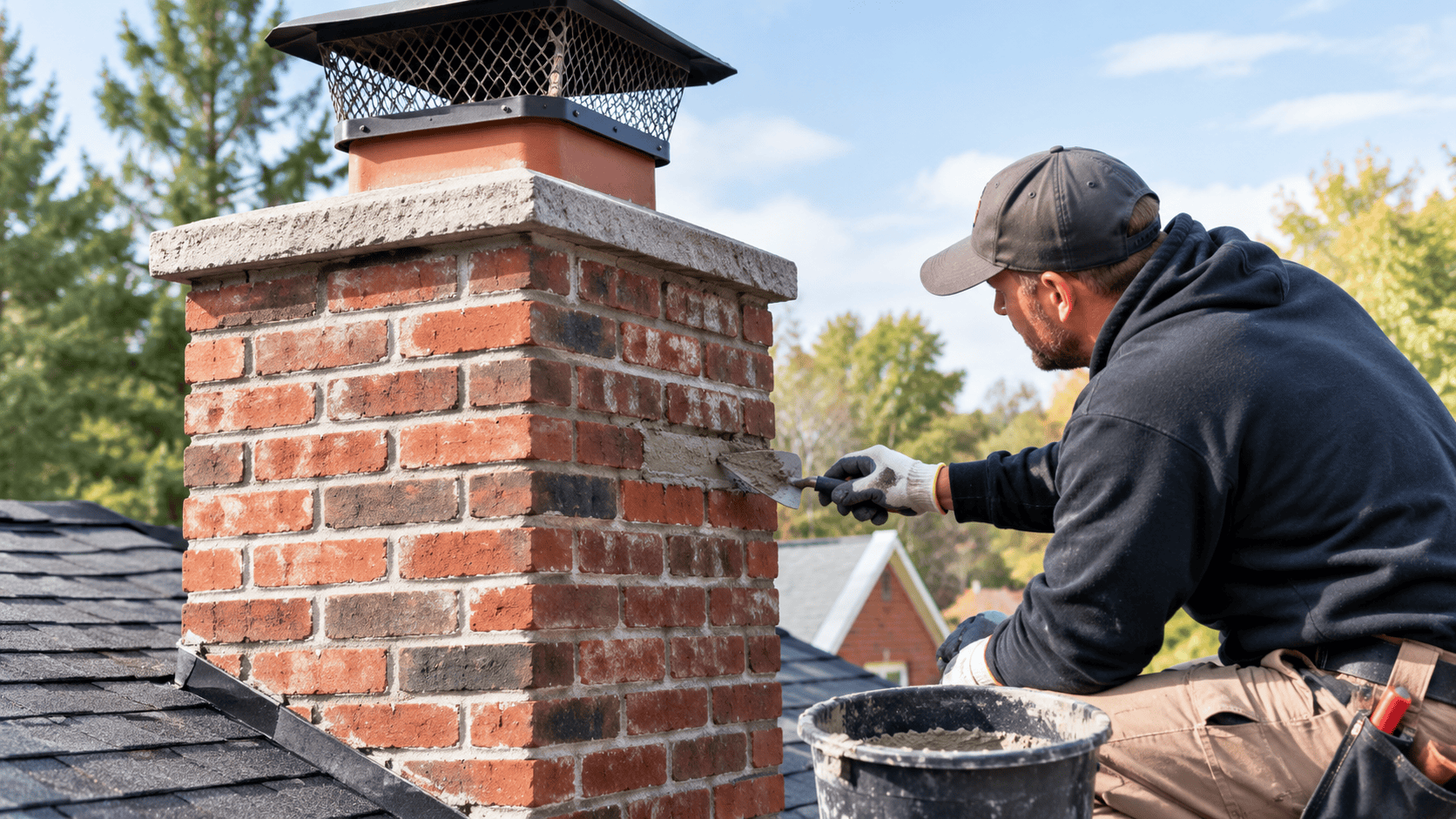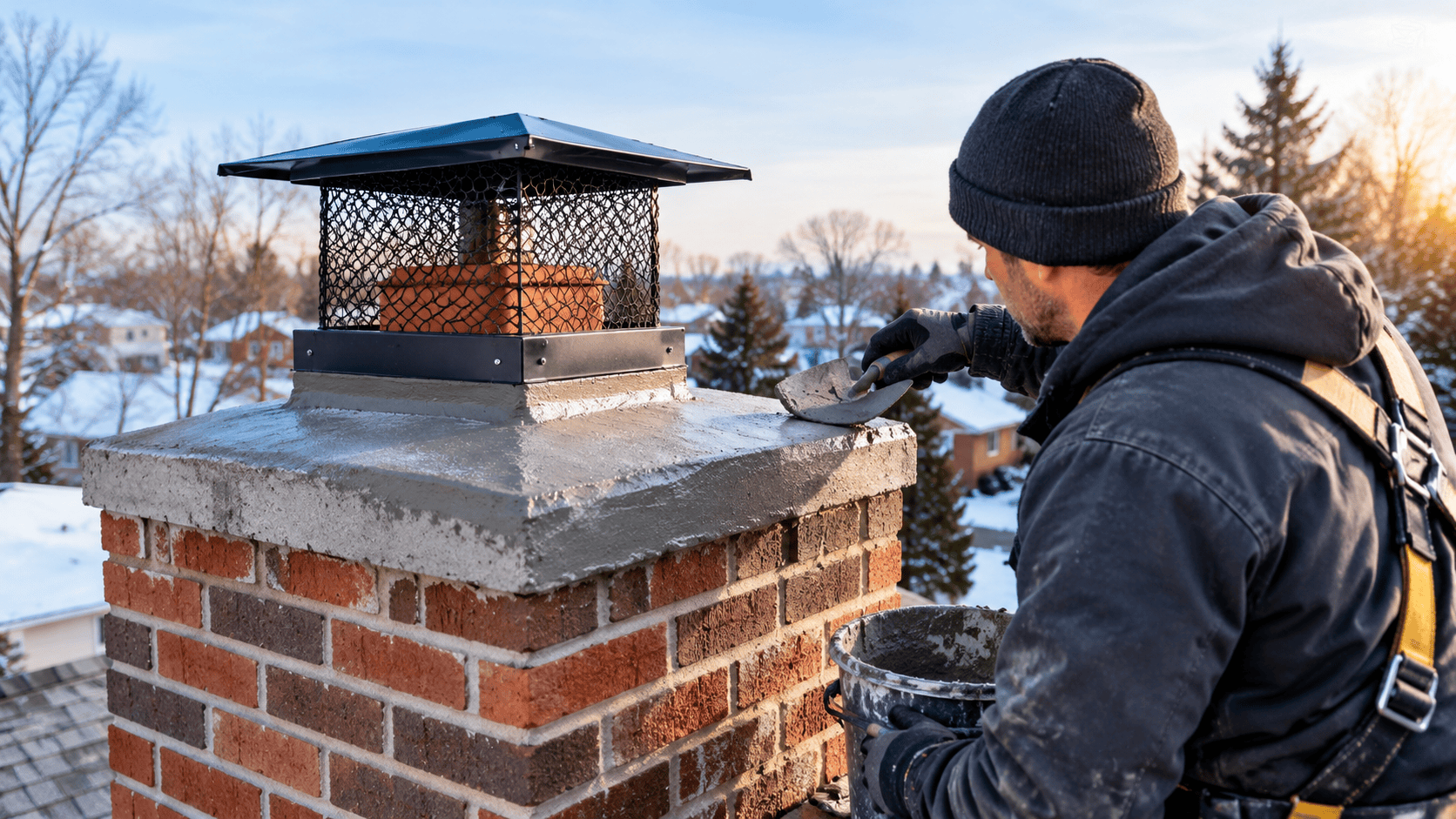
You should get your chimney crown repaired before winter because even a small crack lets rain and melting snow soak into the masonry below. Once freezing weather hits, that trapped water turns to ice, expands, and pushes those cracks wider.
Think of the crown as the roof of your chimney. It’s the slab of mortar or concrete at the very top, and when it’s sound, water runs off and away. When it’s cracked, water gets in, and it usually does its damage out of sight for months before you notice anything.
If you’re looking for chimney crown repair in Maryland, early fall is the right time to act, while the weather is still mild and repairs are simple. It also makes sense to look at chimney cap services in Maryland at the same visit, since the crown and the cap protect different parts of the same chimney.
What Is a Chimney Crown and Why Is It Important?
The chimney crown sits on top of the chimney and extends slightly past the edges of the brick. Its job is simple: shed water. A good crown is sloped so rain runs off instead of pooling, and the overhang keeps water from trickling down the sides of the masonry.
Because it’s up there where you can’t see it, the crown rarely gets a second thought. But it takes the full force of sun, rain, snow, and ice every single year.
- Sits at the top of the chimney, surrounding the flue opening
- Sheds rainwater and melting snow away from the bricks and mortar
- Helps protect the flue liner from moisture
- Faces constant weather exposure, so it wears down over time
Common Signs Your Chimney Crown Needs Repair
Some signs show up on the chimney itself, and others appear inside your home. Say a hairline crack opens up after a rough summer storm. It looks harmless, but it’s a direct path for water. Catching problems like these early is what keeps repairs small.
Not all damage is visible from the ground, so a professional look is often the only way to be sure.
- Chimney crown cracks, from fine hairline cracks to wide, spreading ones
- Crumbling, flaking, or chipping crown material
- Water stains on the chimney exterior or on nearby walls and ceilings
- Loose bricks or deteriorating mortar joints near the top
- A damp or musty smell near the fireplace, which can signal chimney water leaks
How Winter Weather Can Worsen Chimney Crown Damage
Here’s the part that surprises many homeowners: water is what does the damage, but freezing is what makes it serious. When water seeps into a crack and the temperature drops, it freezes and expands, forcing the crack open a little more. Then it thaws, flows deeper, and freezes again. Maryland winters swing above and below freezing often, so this cycle can repeat many times in a single season.
Over time, that can loosen the surrounding brick and mortar and turn a small crown fix into larger chimney masonry repair.
- Frozen water expands inside cracks and widens them
- Repeated freeze-thaw cycles can loosen bricks and mortar
- Moisture can travel deeper and reach the flue and interior surfaces
- Fixing the crown before winter is usually simpler than repairing spread-out damage later
Benefits of Professional Chimney Crown Repair in Maryland
A lasting fix depends on understanding why the crown is failing, not just covering the crack. Professional chimney crown repair in Maryland starts with an honest look at the damage, then a repair that suits the chimney’s construction. A quick patch over a deeper problem may not hold up through a freeze-thaw season.
Timely repair can also help protect the rest of the chimney, which is a good reason not to put it off.
- Helps limit moisture getting into the chimney structure
- Protects masonry from freeze-thaw damage
- Reduces the chance of more extensive repairs down the road
- Supports the chimney’s long-term condition
- Gives you peace of mind before you start using the fireplace
Why Chimney Cap Services Are Also Important
People often mix up the crown and the cap, but they’re two different parts. The crown covers the top of the masonry. The cap sits over the flue opening like a little hat. Good chimney cap services in Maryland help keep rain, birds, squirrels, and debris from getting down the flue, which also helps reduce the moisture that reaches the inside of the chimney.
Together, the two make a protective team. A great crown with a missing cap still leaves the flue exposed, and the reverse is true as well.
- The crown protects the masonry; the cap protects the flue opening
- A properly fitted cap helps block rain, animals, and leaves
- Rust, damage, or a missing cap may mean chimney cap replacement is needed
- Checking both parts together gives you a clearer picture of the chimney’s condition
Chimney Crown Repair or Replacement: Which Do You Need?
It depends. Minor surface cracks can often be repaired, while a crown that’s badly crumbling or cracked all the way through may need to be replaced. How the crown was originally built matters too. Some crowns are made with proper slope and overhang, and others were basically a thin layer of mortar, which tends to wear out sooner.
Rather than guess, it’s smart to get a professional assessment. A trained eye can tell the difference between cosmetic wear and real trouble.
- Small, shallow cracks may be repairable
- Widespread cracking or crumbling may point toward replacement
- The crown’s construction affects which solution works best
- A professional assessment gives you a clear recommendation
Why Schedule a Chimney Inspection Before Winter?
Chimney inspections work best before the heating season, when there’s still time to fix whatever turns up. An inspector can check the crown, cap, masonry, and other visible parts of the chimney, and point out problems before you light your first fire of the year. This kind of winter chimney maintenance also saves you from scrambling to book repairs in the coldest weather.
- Spots crown cracks, damaged caps, and masonry wear early
- Gives you time to plan and schedule repairs
- Helps you avoid surprises during the coldest months
- Pairs well with other seasonal chimney care
Protect Your Chimney With MCP Chimney Services, Inc.
If you’ve noticed cracks, stains, or anything that looks off at the top of your chimney, Maryland homeowners can contact MCP Chimney Services, Inc. to discuss chimney crown repair, chimney cap services, and related chimney maintenance. A quick conversation before winter can help you understand your options and plan ahead.
- Chimney crown repair and related masonry concerns
- Chimney cap services and chimney cap replacement questions
- Chimney inspections and seasonal maintenance inquiries
Conclusion: Don’t Delay Chimney Crown Repairs Before Winter
Chimney crown damage doesn’t heal on its own, and freezing weather often makes it worse. A little attention now can keep moisture out and protect your chimney through the cold months.
- Look for cracks, crumbling, and water stains on and around your chimney
- Remember the crown and the cap do different jobs
- Schedule a professional assessment with MCP Chimney Services, Inc. before winter sets in
Contact MCP Chimney Services, Inc. today to ask about chimney crown repair and chimney cap services for your home.
Frequently Asked Questions
What is the purpose of a chimney crown?
A chimney crown helps shed water away from the chimney masonry and protects the structure from moisture intrusion. MCP Chimney Services, Inc. can help homeowners assess visible crown damage.
What are the signs that a chimney crown needs repair?
Cracks, crumbling material, water stains, and deteriorating masonry are common warning signs. MCP Chimney Services, Inc. can inspect the chimney to determine the appropriate repair.
Why should chimney crown repair be completed before winter?
Freezing and thawing can worsen existing moisture-related damage, so fixing problems early helps keep them from spreading. MCP Chimney Services, Inc. can help homeowners address chimney crown problems before winter conditions arrive.
What is the difference between a chimney crown and a chimney cap?
The crown covers the top of the chimney masonry, while the cap covers the flue opening to help block rain, animals, and debris. MCP Chimney Services, Inc. can help assess whether either component needs attention.
How do I know if my chimney needs crown repair or replacement?
The decision depends on the extent of cracking, deterioration, and moisture damage, and it should follow a professional assessment. MCP Chimney Services, Inc. can help determine the appropriate next steps.