A chimney damper inspection matters before fireplace season because the damper controls whether smoke and combustion gases exit your home safely and whether your fireplace seals tightly when it’s not in use. A rusted, warped, or stuck damper can let smoke into your living space, waste heated air, and invite moisture and drafts. Checking it before the first fire is a simple way to avoid surprises.
Whether you’re considering damper installation in Washington, DC, or just wondering if your current damper still works properly, here’s what to know.
What a Chimney Damper Does
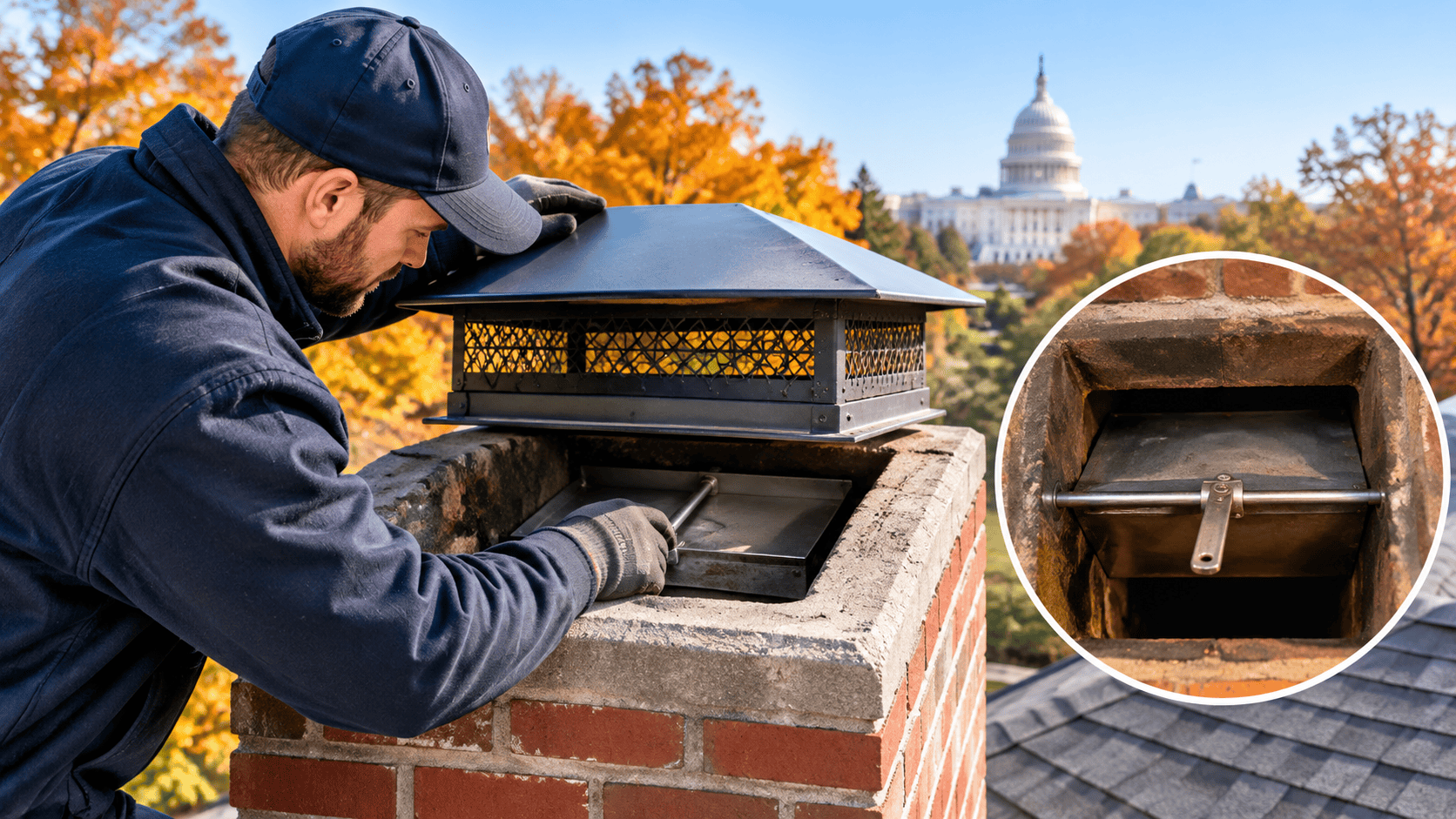
The damper is a movable metal plate or door, usually just above the firebox or at the top of the chimney. Open, it lets smoke and gases travel up and out. Closed, it seals the flue from the room. Most homeowners never think about it until something goes wrong, which is exactly why a pre-season check makes sense.
- Safety: A working damper helps exhaust combustion byproducts properly.
- Energy efficiency: A well-sealed damper limits conditioned air escaping up the flue.
- Comfort: A leaky damper can cause cold drafts and let outdoor odors in.
Common Signs of Damper Damage
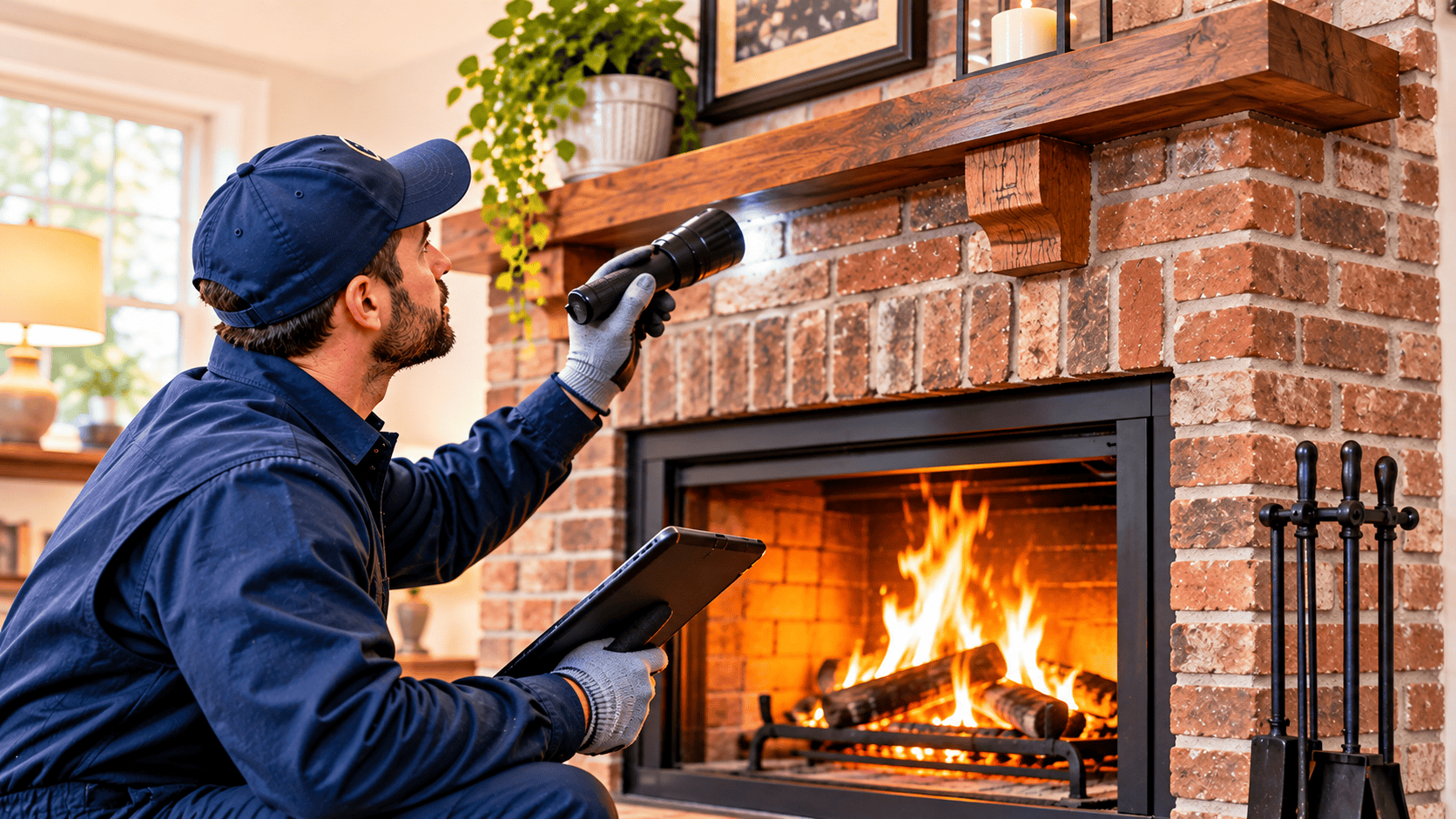
A flashlight peek up the flue only shows so much. Cracked parts, creosote buildup, and hidden water damage are hard to see from the hearth. A professional chimney damper inspection shows how the damper actually operates and how the surrounding flue is holding up. Chimney safety guidance, including recommendations from the Chimney Safety Institute of America, calls for an annual chimney inspection, and the damper check fits right into that visit.
- Does the damper open and close fully and smoothly?
- Are there signs of rust, warping, or missing parts?
- Does it seal well when closed?
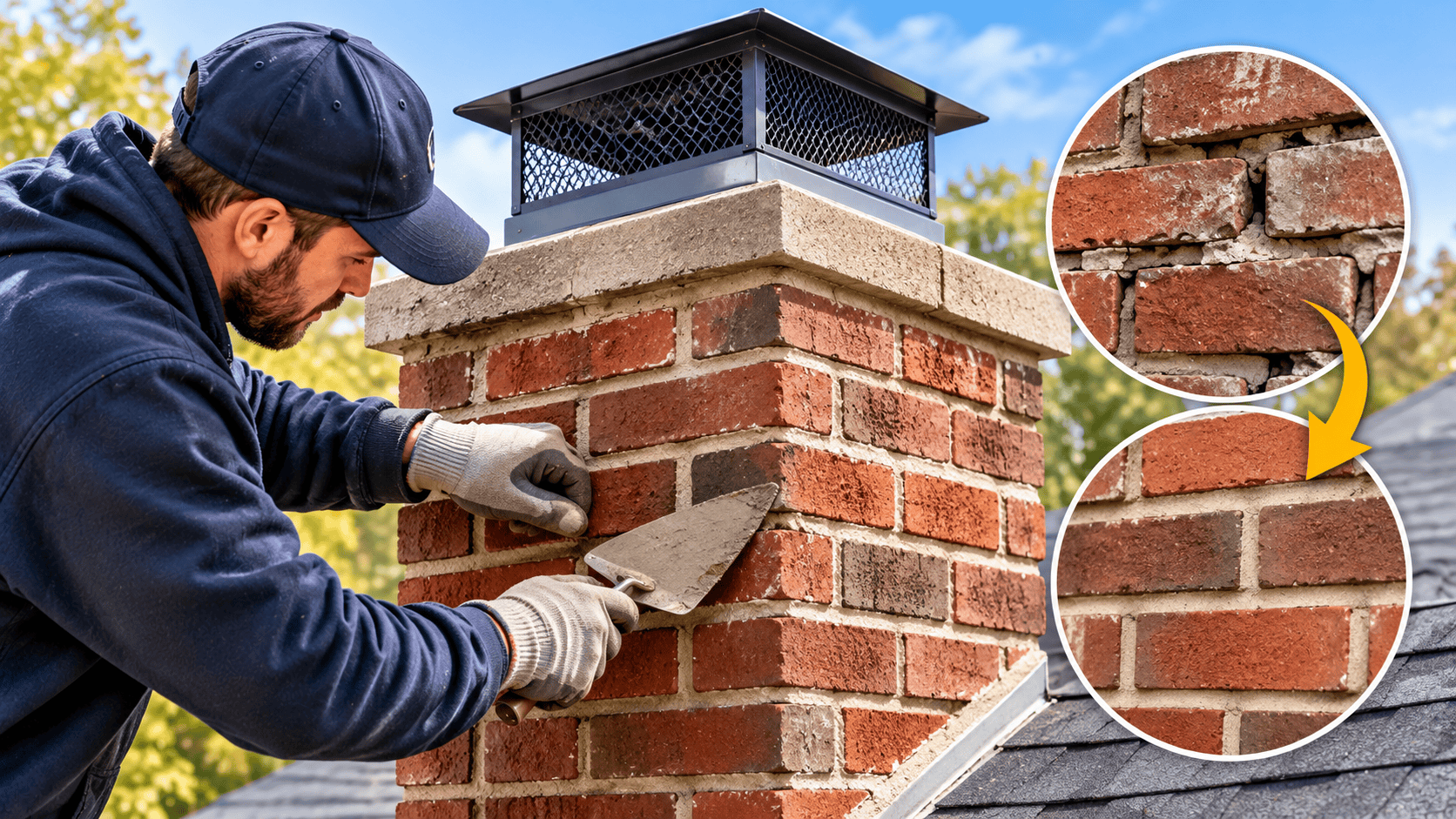
- Is the chimney cap in place and intact?
When Repair, Replacement, or Installation Makes Sense
Not every damper problem needs the same fix. Chimney damper repair usually fits minor issues like a stuck handle, loose connection, or light rust. Chimney damper replacement becomes more likely when the plate is badly corroded, warped, cracked, or no longer seals. New damper installation may be worth considering if a fireplace has no working damper or an outdated one. Some homeowners also look at top-sealing dampers, but whether that suits your chimney depends on its design, so it’s best assessed in person.
- Repair: sticking, alignment, minor rust
- Replacement: heavy corrosion, warping, cracks, failed seal
- Installation: missing or outdated damper
How Chimney Caps and Dampers Work Together
The damper protects the chimney from the inside, and the cap protects it from the top. Together, chimney caps and dampers in Washington, DC, and elsewhere, form a layered defense against moisture, debris, and animals. When a cap is missing or damaged, water and debris reach the damper sooner, which speeds up rust and buildup. That’s why chimney caps installation often comes up during a damper inspection
- Rain and snow: Moisture in the flue can rust the damper and damage masonry.
- Debris: Leaves and twigs can collect and cause blockages.
- Animals: Birds and squirrels look for sheltered spots in uncapped chimneys.
Tips for Washington, DC Homeowners
Washington, DC, has a mix of older and newer homes, and many fireplaces sit unused for long stretches. An idle fireplace can have a stiff, rusted, or blocked damper. Humid summers and cold winters can also stress chimney parts through moisture and temperature swings. Since every chimney is different, it’s wise to have yours checked instead of assuming it’s fine because it worked last year.
- Open and close the damper a few times before the first fire
- Keep it fully open while a fire burns, until it’s completely out
- Close it when the fireplace isn’t in use
- Watch for rust, debris, or water stains in the firebox
- Schedule an annual inspection before the season starts
Conclusion
If your damper sticks, rusts, or simply hasn’t been checked in a while, don’t wait for the first cold night. MCP Chimney Services, Inc. offers chimney sweeping, inspection, repair, and cap installation, so your damper and the rest of your chimney can be evaluated together. Washington, DC, homeowners can contact MCP Chimney Services, Inc. to schedule a damper inspection or ask about repair, replacement, or damper installation.
Frequently Asked Questions
How often should a chimney damper be inspected?
Once a year, ideally before fireplace season, as part of a routine chimney inspection
What are the common signs of a damaged chimney damper?
Rust, a sticking handle, gaps when closed, drafts, and smoke entering the room.
When does a chimney damper need repair or replacement?
Repair suits minor issues like sticking or light rust. Replacement is more likely for heavy corrosion, warping, cracks, or a failed seal.
Why is chimney cap installation important?
A cap keeps rain, debris, and animals out of the flue and helps protect the damper. MCP Chimney Services, Inc. can inspect your cap and install a new one if needed.
Can a damaged chimney damper increase energy costs?
Yes, it can. A damper that doesn’t seal may let indoor air escape up the chimney, though the impact varies by home.