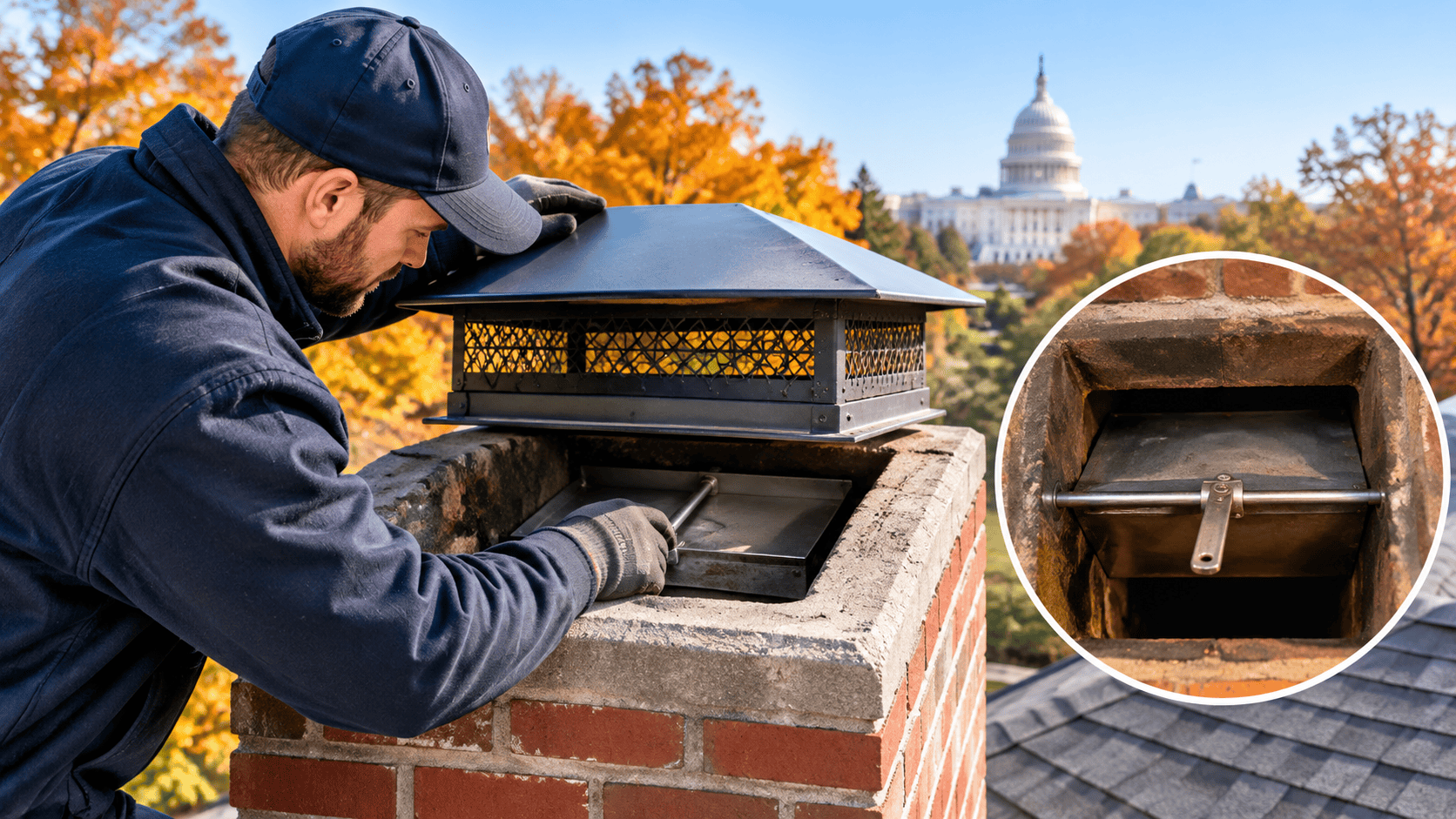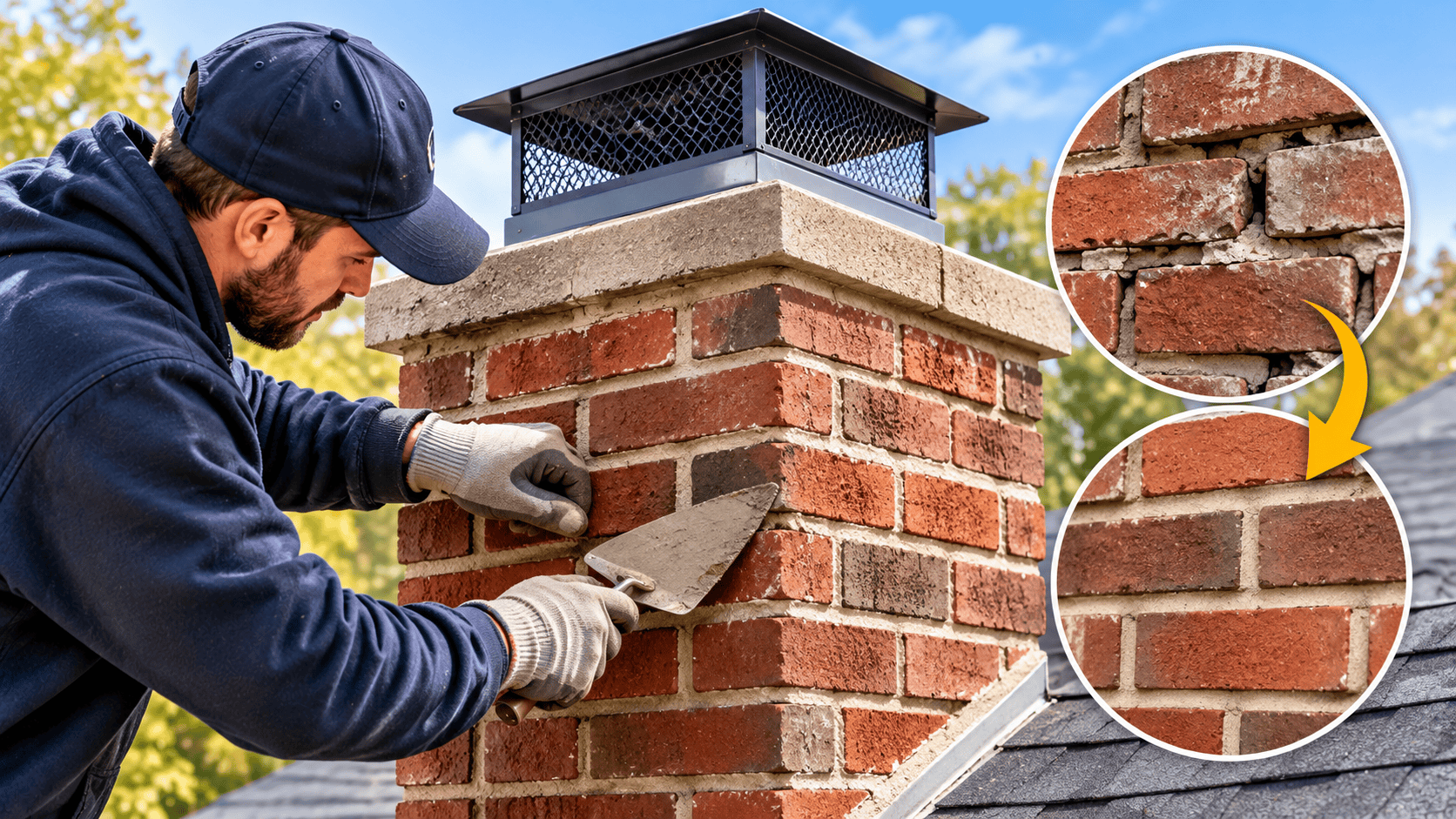
Your chimney probably needs tuckpointing if you notice crumbling, cracked, or recessed mortar, bricks that feel loose, white powdery stains on the masonry, or damp spots near the fireplace after rain. Mortar joints hold the chimney together and keep water out, so once they start failing, the damage tends to speed up. Catching the signs early usually means a smaller repair and a lower bill.
Most homeowners don’t look closely at their chimney until something goes wrong, and that’s understandable. If you’ve spotted something odd, the next step is to find a trusted tuckpointing service in Maryland before small gaps turn into structural problems. Here’s what to look for, what the repair involves, and when a bigger job is needed.
What Is Chimney Tuckpointing, and Why Do Mortar Joints Matter?
Tuckpointing is a masonry repair where old, deteriorated mortar is removed from between the bricks and replaced with fresh mortar. You may also hear it called repointing, joint restoration, or mortar repair.
Mortar is more than glue. It spreads the weight of the bricks evenly, holds each one in place, and acts as a barrier against rain, snow, and ice. Brick is fairly durable, but mortar is softer and usually wears out first. When it does, the brick and everything behind it become vulnerable.
Common Warning Signs Your Chimney Needs Tuckpointing
You don’t need to be a mason to notice most of these. Binoculars from the ground or a look from an upper window can tell you a lot. Never climb onto the roof to inspect it yourself.
- Crumbling or missing mortar: sandy debris on the roof, in the gutters, or near the chimney base.
- Visible cracks: hairline cracks may be early wear, while wider ones let water in more easily.
- Loose or shifting bricks: a brick that moves or sticks out needs prompt attention.
- Water leaks and moisture: ceiling or wall stains near the chimney, or a damp smell by the fireplace.
- White stains (efflorescence): a chalky residue left when water carries salts to the surface.
- Deteriorating or recessed joints: mortar that sits well behind the brick face no longer protects the wall.
None of these automatically means a major problem, and some have other causes. If you notice more than one, though, it’s worth having a professional take a look.
How Damaged Mortar Leads to Bigger Problems
Water is the biggest enemy of any chimney. It stands exposed on all sides, so when mortar joints open up, moisture works its way into the masonry and stays there.
In Maryland, where temperatures often swing above and below freezing in colder months, trapped water can freeze and expand. Over repeated cycles, this can push bricks apart, flake the brick face, and widen the gaps. What starts as a minor joint repair can grow into brick replacement, partial rebuilding, or interior water damage, which is why acting early often saves money.
What Happens During the Tuckpointing Process?
Knowing what to expect makes it easier to compare estimates. In general, the process looks like this:
- Assessment: the mason checks the joints and the condition of the brick.
- Removing old mortar: deteriorated mortar is carefully cut out without chipping the surrounding brick.
- Preparing the joints: the joints are cleaned and often dampened so the new mortar bonds well.
- Applying new mortar: fresh mortar is packed in and tooled to a clean finish that matches the existing look where possible.
A compatible mortar mix matters, since a mix much harder than the original brick can cause new stress.
Tuckpointing vs. Broader Chimney Repair Services in Maryland
Tuckpointing works well when the bricks are mostly sound and the problem is worn mortar. But it can’t fix everything. If bricks are cracked, flaking, or leaning, or if the crown, flashing, or flue is damaged, you may need broader chimney repair services in Maryland instead of, or alongside, tuckpointing.
- Tuckpointing is often enough when damage is limited to mortar joints and the bricks are firm.
- Wider masonry repair may be needed when bricks are broken or water damage goes beyond the joints.
- An inspection helps when the source is unclear, since leaks sometimes come from flashing or the crown.
Benefits of Timely Maintenance and Masonry Inspections
Regular inspections let a trained eye catch mortar problems before they’re visible from the ground. Staying ahead of wear helps protect the brick, limits moisture getting into the structure, and can keep small repairs from becoming expensive ones. Many homeowners schedule a check in late summer or early fall, before regular fireplace use, though any time you spot a warning sign is a good time to call.
How MCP Chimney Services, Inc. Can Help
MCP Chimney Services, Inc. works with Maryland homeowners on chimney maintenance and masonry concerns. If you’re unsure whether your mortar is failing, the team can inspect the masonry, explain what they find in plain language, and recommend a repair that fits your chimney’s actual condition.
Protect Your Chimney Before Small Problems Grow
Don’t wait for a leak or a loose brick to force the issue. If your chimney shows any of these signs, contact MCP Chimney Services, Inc. today to schedule an inspection and get honest guidance on professional tuckpointing and chimney repair for your Maryland home.
Frequently Asked Questions
What are the common signs that a chimney needs tuckpointing?
Crumbling or missing mortar, cracks, recessed joints, loose bricks, white stains, and water marks near the chimney.
How often should chimney tuckpointing be performed?
There’s no fixed schedule. It depends on weather exposure and the chimney’s condition, so regular inspections show when it’s needed.
What is the difference between tuckpointing and repointing?
The terms are often used interchangeably. Repointing replaces worn mortar, while tuckpointing may also include finishing the joints to match the brickwork.
Can damaged chimney mortar joints cause water leaks?
Yes. Cracked or recessed joints let moisture into the masonry, which can lead to staining, brick damage, and sometimes leaks inside the home.
When should I contact MCP Chimney Services, Inc. for chimney tuckpointing?
As soon as you notice crumbling mortar, cracks, loose bricks, or unexplained moisture, or before the heating season if your masonry hasn’t been checked recently.