If you've got a fireplace in your Maryland home, you already know how good it feels on a cold night. What most people don't think about is the chimney itself until it starts acting up. Maybe smoke's not drawing right, maybe there's a stain spreading across the ceiling near the mantel, or maybe you just noticed a crack running down the outside brick and you're not sure how bad it is.
Here's the thing about chimneys: they don't get a break. Blazing heat inside, freezing rain and snow outside, year after year. Something's going to give eventually. The question is whether you catch it early or find out the hard way.
Why Chimney Maintenance Actually Matters
I'll put it this way: nobody gets excited about chimney maintenance the way they get excited about a new kitchen or a finished basement. It's not glamorous. But skip it long enough and you're looking at cracked masonry, water damage, or worse, a chimney fire from creosote that built up over a few too many winters without cleaning. That's usually the point where homeowners start looking into Chimney Repair Services in Maryland, often later than they should have.
Staying on top of it keeps things safer and honestly just saves money. Less creosote means less fire risk. Fewer freeze-thaw cycles chewing through unsealed brick means the structure lasts longer. And a chimney that's venting properly keeps smoke and gas out of your living room instead of backing up indoors.
Most people only call someone once there's a visible problem. But by then, whatever's wrong has probably been developing for a season or two already.
Signs Your Chimney Is Telling You Something
Chimneys aren't exactly subtle when something's off. You just have to know what you're looking at.
Bricks That Are Cracking or Falling Apart
Brick holds up well against a lot, but water is patient. It gets into tiny pores in the brick, freezes, expands, and slowly breaks the material apart from the inside; this happens over years, not overnight.
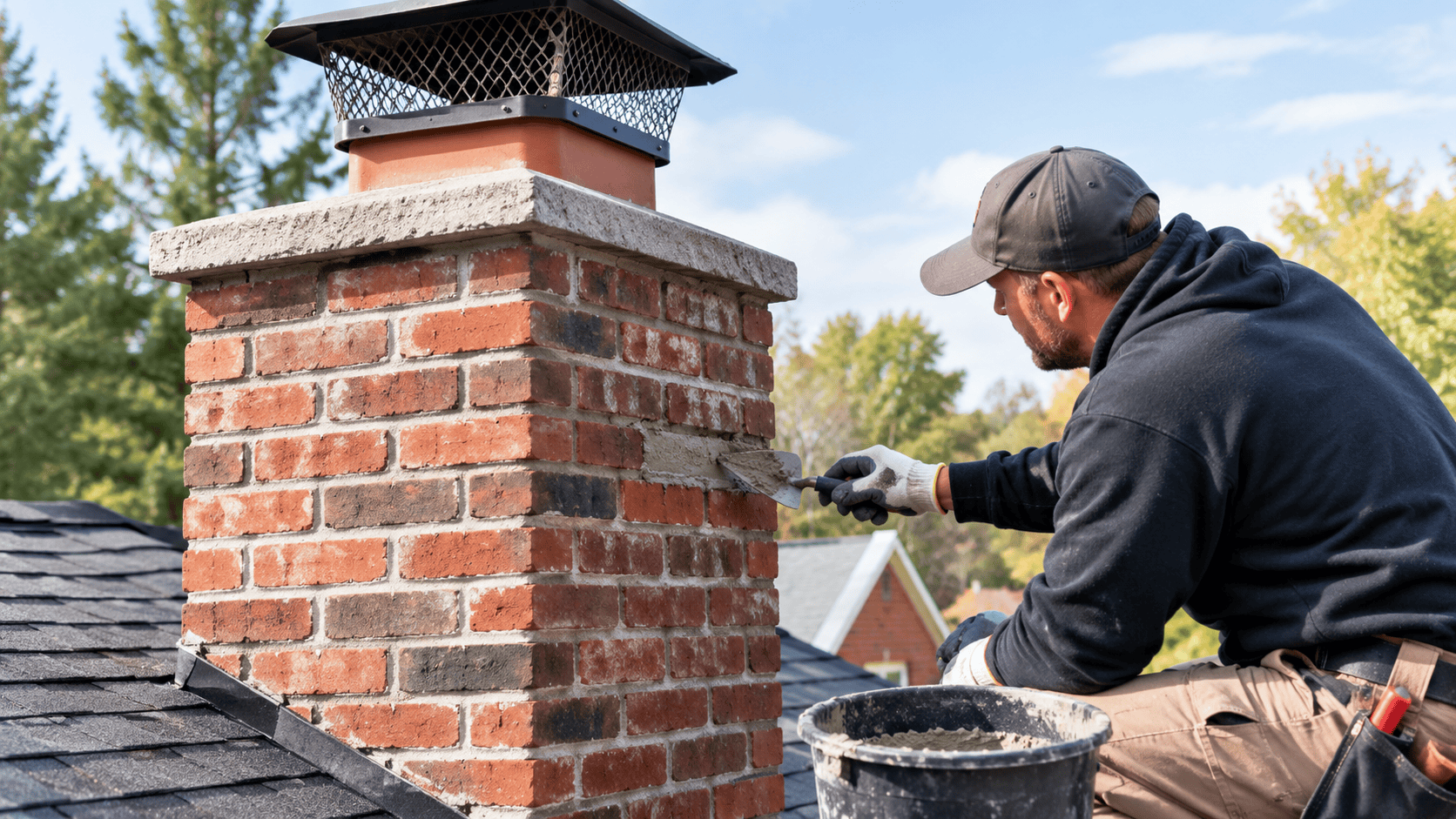
Some things worth checking: cracks running through individual bricks, spots where the brick feels soft or flakes off when you touch it, discolouration on the outer wall, or bricks near the top that look loose or are just missing. Once this kind of decay starts, it tends to spread to nearby bricks fairly quickly, which is why chimney brick repair is one of those things you don't want to put off for too long.
The Crown and the Mortar Joints
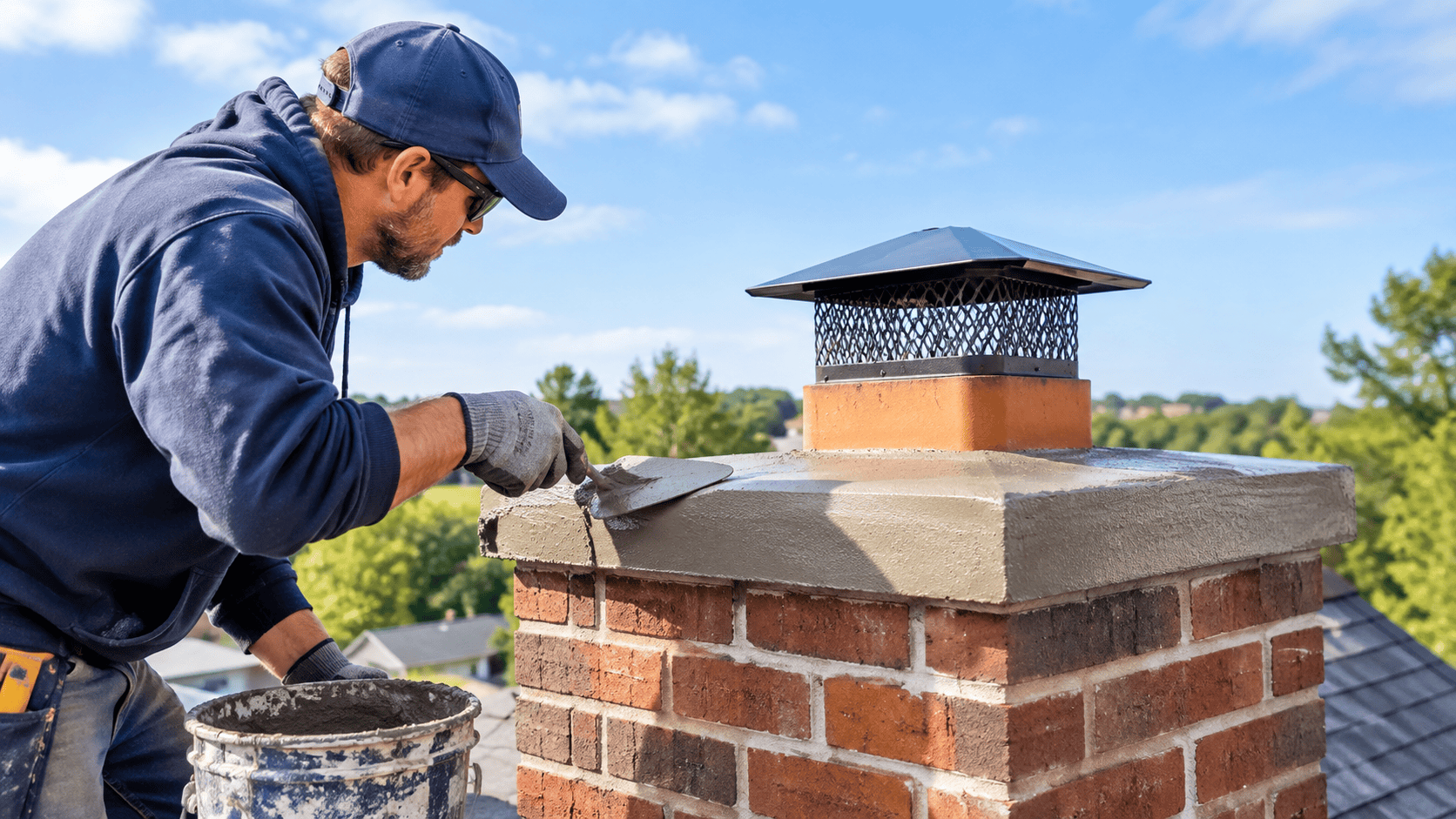
The crown is that concrete cap sitting on top of the chimney, and its entire purpose is keeping water out of everything below it. Mortar joints do something similar on a smaller scale, sealing the gaps between bricks.
When either one fails- a crack in the crown, crumbling mortar, water pooling on top after it rains- moisture starts working its way into the structure. Bricks that wiggle when you nudge them are usually a sign the mortar around them has given out. Chimney crown and mortar repairs are both manageable when you catch them early. Wait too long, though, and you're looking at a much bigger project.
Water Damage and Leaks
Out of everything that can go wrong, water causes the most damage, and it doesn't take much of a leak to start a real problem.
Watch for water stains on the ceiling or wall near the fireplace. A musty smell is coming from the firebox. Rust showing up on the damper. A white, chalky film on the brick, that's called efflorescence, and it's basically the mineral residue left behind after water has been moving through the masonry. Any of these usually mean it's time for chimney masonry repair before things get worse.
Why a Professional Inspection Is Worth It
A lot of what goes wrong with a chimney happens somewhere you can't see from the driveway, inside the flue, behind the liner, up around the crown. That's really the whole point of a chimney inspection: someone with the right tools and training actually gets in there and checks.
During a typical inspection, a technician will look at the condition of the liner, check whether the chimney is drafting the way it should, look for cracks or weak spots in the masonry that aren't obvious from ground level, and check for early signs that water's getting in somewhere it shouldn't.
For older homes across Maryland especially, an annual inspection tends to catch things a lot sooner than waiting for a problem to announce itself.
What Chimney Cleaning Services Actually Do
Cleaning and repair aren't the same thing, but they work together. Every fire you burn leaves behind creosote, a sticky, flammable residue that builds up inside the flue over time. Enough of it, and you've got a genuine fire hazard sitting right there in your chimney.
A cleaning service typically clears out the soot and creosote, removes any blockages (leaves, debris, sometimes even a bird's nest; it happens more than you'd think), checks the liner while it's exposed, and gets the airflow back to where it should be. Pair that with basic fireplace maintenance on a regular schedule, and you'll notice the fireplace just performs better: less smoke drifting back into the room, more consistent burn.
When It's Time for Fireplace Restoration
Sometimes a patch job just isn't enough. Older fireplaces, especially the ones that have been burning wood for decades, sometimes need more than a repair here and there.
Fireplace restoration services in Maryland tend to come into play when the firebox itself is heavily worn or cracked, when a home has older or historic masonry that needs to be matched carefully rather than just patched over, or when there are several problems happening at once instead of just one isolated issue. Restoration is usually about bringing back both function and appearance, which matters a lot in older Maryland homes where the fireplace is often a character feature, not just a heat source.
The Case for Fixing Things Early
Waiting on chimney repairs almost never actually saves money. It just pushes the cost down the road, usually with interest.
Deal with problems while they're small and you're generally looking at lower repair bills, less risk of fire or structural failure, better energy efficiency since the system is actually sealed and venting properly, and a chimney that just lasts longer overall. Calling for Chimney Repair Services the moment something looks off is almost always the cheaper path compared to waiting it out.
Why It’s Worth Hiring Someone Experienced
Chimney work isn't really a DIY weekend project, not if you want it done right. Between the masonry, the ventilation, and the fire safety considerations, there's a lot that can go sideways if you don't know exactly what you're looking at.
An experienced team knows the materials, has the right equipment and safety gear, understands how Maryland's climate specifically wears on masonry over the years, and, maybe most importantly, can find the actual root of a problem instead of just patching whatever's visible on the surface.
MCP Chimney & Masonry has been doing exactly this kind of work for homeowners across Maryland for years: chimney repairs, fireplace work, general masonry. Whether you need chimney cleaning services, more involved chimney masonry repair, or a full fireplace restoration, having someone experienced handle it tends to be the difference between a fix that lasts and one you'll be redoing in a couple years.
Bottom Line
Your chimney does more work than most people give it credit for, and small problems – a cracked brick, a damaged crown, a slow leak – rarely stay small if you leave them alone. Regular inspections, routine cleaning, and repairs done when they're still minor keep the whole system safer and more reliable through every season.
If you've noticed any of the warning signs above, or you just want some peace of mind before the weather turns, reach out to MCP Chimney Services, Inc. Professional Chimney Repair Services, cleaning, inspections, and restoration: whatever the fireplace needs, it's worth having someone who actually knows chimneys take a look.
Frequently Asked Questions
How often should I actually get my chimney inspected?
Once a year, ideally before it gets cold. If you use the fireplace a lot or your house is older, more frequent checks aren't a bad idea.
Do I need a cleaning or a repair? How do I even tell?
If it's mostly soot, creosote, or the fireplace just isn't drafting well, that's usually a cleaning situation. Cracked bricks, damaged mortar, actual leaks – that's repair territory. Honestly, a lot of chimneys need both at the same time.
Can a small crack in the crown turn into something bigger?
Yeah, more often than people expect. The crown's whole job is keeping water out, so even a small crack gives moisture a way in, and from there it works on the mortar and eventually shows up as an interior leak.
Is restoration something only really old houses need?
Not exclusively. Older homes need it more often just because of age, but any fireplace with serious damage or years of neglected maintenance could end up needing a restoration instead of a simple repair.
What should I actually be watching for as early warning signs?
Crumbling brick, a cracked crown, water stains near the fireplace, and a musty smell from the flue- those are usually the first clues something's starting. Catch it there, and the fix is usually pretty manageable.