Chimney crown repair is usually the right choice when the damage is limited and the crown is still structurally sound. Replacement becomes necessary when the crown has widespread cracking, serious deterioration, or has failed structurally. A professional inspection is the most reliable way to tell which situation you have.
The crown sits at the highest, most exposed point of your chimney, so small problems there can turn into bigger ones over time. Knowing the difference between a repairable crown and one that needs rebuilding can save you from recurring leaks and further masonry damage.
What Is a Chimney Crown and Why Does It Matter?
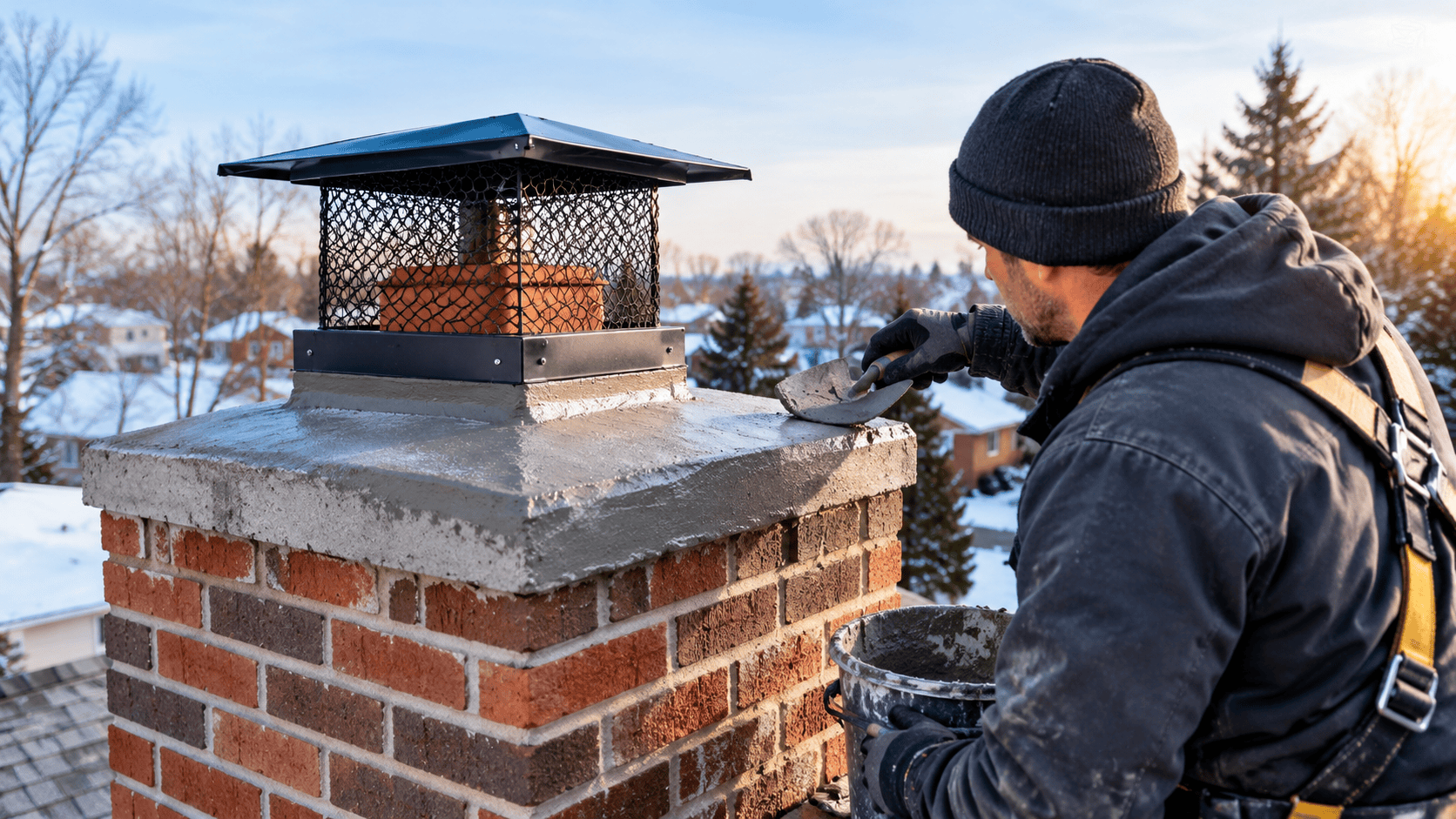
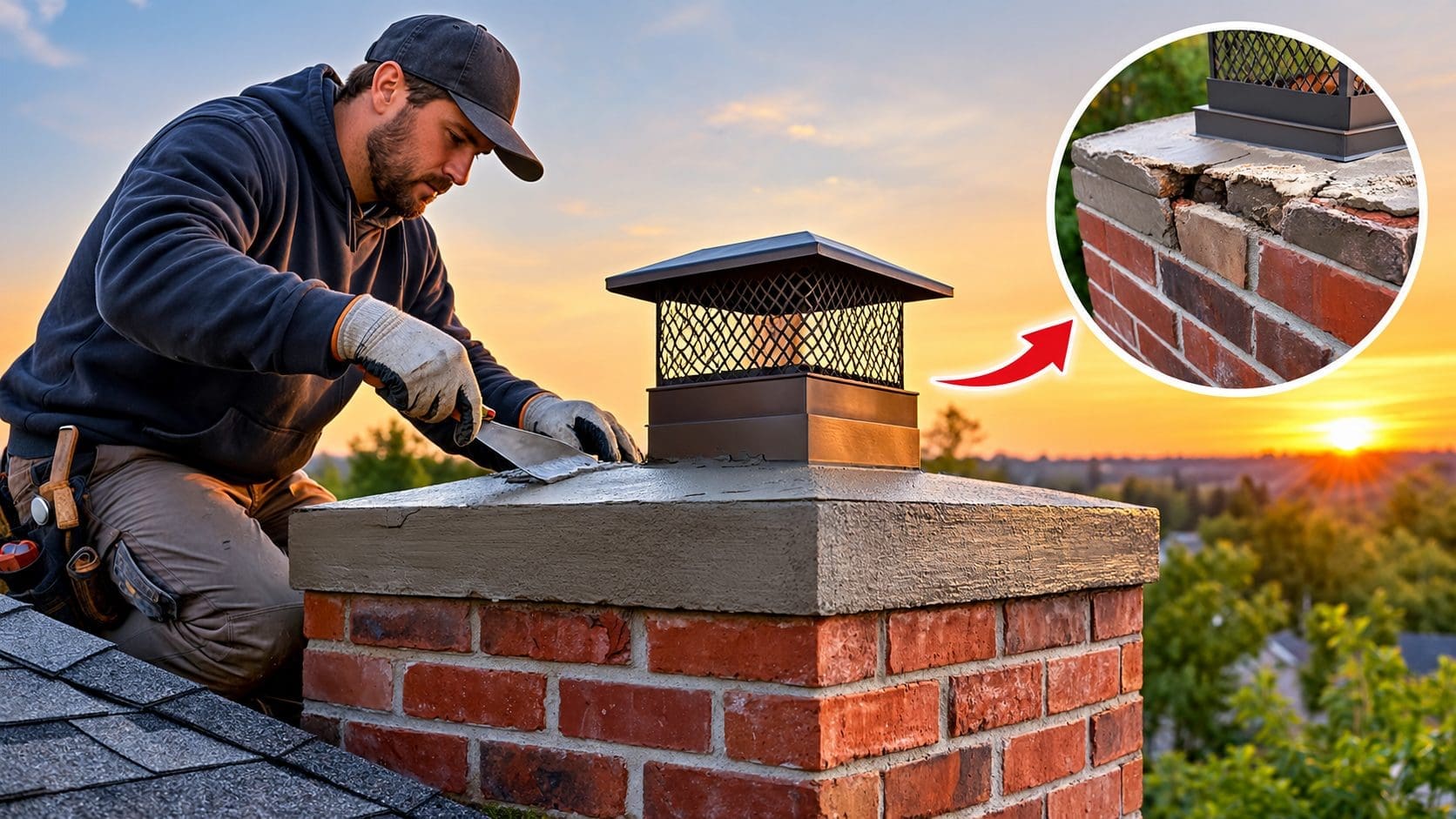
The chimney crown is the protective surface on top of the chimney that covers the masonry around the flue. A well-built crown directs rainwater away from the chimney structure, which limits moisture from soaking into the brick and mortar below.
When a crown cracks, drains poorly, or begins to break down, water can reach the masonry underneath. Over time, that can lead to chimney moisture damage and a need for broader chimney masonry repair.
- Directs water away from the chimney structure
- Protects the masonry around the flue
- Reduces moisture penetration into brick and mortar
Common Signs of Chimney Crown Damage
Some warning signs are easy to spot, while others only show up after moisture has already done some harm. Watch for changes at the chimney top and in the rooms near the chimney. Some damage can’t be seen from the ground, so please don’t climb onto the roof to check it yourself.
- Visible cracks across the chimney crown
- Crumbling or deteriorating crown material
- Water stains or other signs of moisture intrusion
- Damaged masonry near the chimney top
- Loose or deteriorating mortar around the upper chimney
- Recurring leaks near the chimney area
When Is Chimney Crown Repair the Better Option?
Chimney crown repair in Maryland is often appropriate when cracks are limited, the crown is still structurally sound, and deterioration hasn’t compromised the overall structure. In those cases, a targeted fix can restore protection without rebuilding the whole crown.
A professional will evaluate the damage and decide whether patching, resurfacing, sealing, or another method suits the job. The right approach depends on the crown’s material, design, and condition. Not every crack can be solved with a sealant, so an accurate assessment matters.
- Limited, localized cracking
- A crown that remains structurally sound
- Repair method chosen based on material, design, and condition
When Does a Chimney Crown Need Replacement?
Replacement may be necessary when the crown has widespread cracking, severe deterioration, structural instability, or damage that can’t be reliably repaired. A professional can assess the crown, identify contributing problems, and recommend a suitable replacement if one is needed.
The goal is to restore effective water protection and prevent repeat damage, not to default to replacement. Sometimes chimney crown restoration is enough, and sometimes rebuilding is the more dependable path.
- Extensive or widespread cracking
- Crumbling or severely deteriorated material
- Structural instability
- Damage that repairs can’t reliably address
Chimney Crown Repair vs. Replacement: Key Differences
Repair is generally less extensive when the crown is still sound, while replacement involves removing and rebuilding the damaged crown. The right choice depends on what an assessment finds, and no one can promise a specific lifespan or cost without seeing the chimney.
- Extent of damage: limited for repair, widespread for replacement
- Structural condition: sound for repair, compromised for replacement
- Scope of work: targeted fixes versus removal and rebuilding
- Recurring problems: repair may not hold if underlying damage is severe
- Long-term moisture protection: the best option is the one that reliably sheds water
Why Chimney Inspection Services Are Important
Professional chimney inspection services help identify crown damage, deteriorating masonry, chimney cap issues, flashing concerns, and signs of water intrusion. A thorough chimney damage inspection also helps pinpoint where moisture is actually coming from. That matters because a chimney leak can start in several places. Repairing the crown alone may not stop a leak that is really coming from the flashing or cap. If you notice visible damage, recurring leaks, or other changes, it’s wise to arrange an inspection.
- Identifies crown, masonry, cap, and flashing problems
- Helps trace the true source of moisture
- Supports chimney leak prevention before damage spreads
How Chimney Cap Services in Maryland Help Protect Your Chimney
The crown and the cap are not the same thing. The crown is the protective masonry or concrete surface at the top of the chimney, while a chimney cap is typically a fitted cover over the flue opening that helps keep out rain, debris, and animals.
Chimney cap services in Maryland may include inspection, repair, or replacement when a cap is loose, damaged, corroded, or missing. Maintaining both the crown and the cap helps protect the whole chimney system.
- Cap inspection to check fit and condition
- Chimney cap replacement or installation when needed
- Protection against rain, debris, and animals
How Maryland Weather Can Affect Chimney Crowns
Rain, moisture, freezing temperatures, and repeated freeze-thaw cycles can all contribute to deterioration in crowns and surrounding masonry. Water that enters small cracks can expand when it freezes, which can widen them over time.
Weather isn’t the only cause, since age, original construction, and material quality also play a part. Still, prompt repairs and good water-management measures can reduce the risk of more extensive damage.
- Freeze-thaw cycles can widen existing cracks
- Repeated moisture exposure wears down masonry
- Early repairs help limit larger problems
Schedule a Chimney Inspection
If you’ve noticed cracks, crumbling material, or recurring leaks near your chimney, don’t wait for the damage to spread. Contact MCP Chimney Services, Inc. to discuss your chimney crown concerns, arrange an inspection, and learn whether repair or replacement may be right for your home.
Frequently Asked Questions
Repair or Replacement of a Chimney Crown?
If the crown is structurally sound, minor damage may be repairable, but extensive cracking or deterioration may require replacement. After an assessment, MCP Chimney Services, Inc. can help homeowners understand the condition of their chimney and determine the best option for them.
Signs That Indicate Chimney Crown Needs Repair
Warning signs can be visible cracks, crumbling material, moisture coming in and deterioration around the top of the chimney. MCP Chimney Services, Inc. can help homeowners determine if crown damage exists and whether repair or replacement is the best option.
How often should a chimney be inspected?
Chimneys should generally be inspected at least once a year, with additional inspections when damage or operating concerns arise. MCP Chimney Services, Inc. can help homeowners address inspection needs and identify potential problems before they become more extensive.
What is the difference between a chimney crown and a chimney cap?
The crown covers and protects the top of the masonry chimney, while the cap covers the flue opening and helps keep out rain, debris, and animals. MCP Chimney Services, Inc. can help homeowners assess whether either component needs attention.
Can a damaged chimney crown cause water leaks?
Yes. Cracks or deterioration in a crown can let water into the masonry and contribute to moisture damage. Leaks can also come from flashing, caps, or other areas, so MCP Chimney Services, Inc. can help homeowners investigate the potential sources of chimney moisture problems.